As new growth opportunities emerge for Vietnam’s construction industry, driven by infrastructure investment, FDI, AI and data centers, Coteccons has chosen a distinctive path: growth through discipline, productivity and quality. The Annual General Meeting of Shareholders for fiscal year 2026 served as an occasion for the company to share its vision for the next phase, in which the goal is not only to build more projects but also to create greater value for shareholders and stakeholders.
On the morning of October 20, coinciding with Vietnamese Women’s Day, Coteccons Construction Joint Stock Company (HOSE: CTD) held its 2026 Annual General Meeting of Shareholders in Ho Chi Minh City.
Starting at 8:00 a.m., the program ran until nearly 1:00 p.m., exceeding the planned schedule. Hundreds of attendees remained in the hall until the final minutes, while the livestream recorded nearly 4,000 views.
In his opening remarks at the 2026 Annual General Meeting of Shareholders, Chairman of the BOD Bolat Duisenov began by extending his greetings on Vietnamese Women’s Day and recognizing the contributions of women working on construction sites.
He shared that Coteccons currently has 120 female site secretaries, who are responsible for procedures, documentation, processes and support for construction activities. However, their role extends beyond administrative work; they also help bring gender balance to the construction industry, a sector with very few women. More importantly, they are the ones who “keep the flame alive”, bonding teams together and nurturing the culture and working environment on site.
“Their names rarely appear in our reports, but our reports could not take shape without them,” Mr. Bolat said.
Coteccons’ leader told the story of Ms. Kim Le, who has worked for many years on the Ba Na Hills project, where harsh weather conditions require engineers and workers to eat and sleep on site almost all year round, living closely with the towering mountains and vast forests. In such circumstances, she sees her job as keeping the flame of warmth alive for her colleagues.
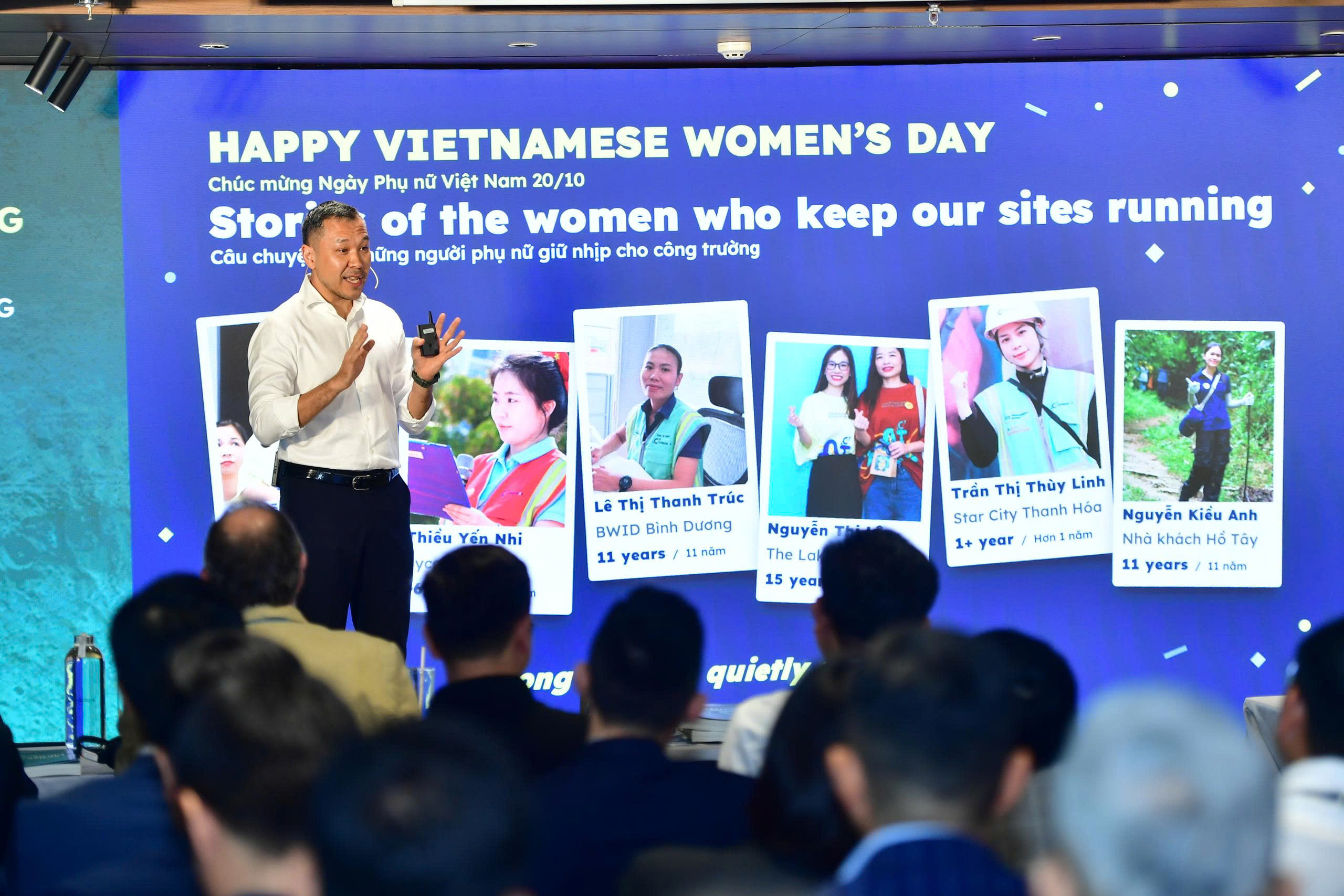
Another story is that of Ms. Truc, site secretary at the BWID project in Binh Duong Ward, Ho Chi Minh City, who originally graduated in nursing. She once considered changing jobs, but after promptly providing first aid to a worker with a minor injury, she realized the meaning of her current work and decided to stay with Coteccons, where she has now worked for 11 years.
From these human stories, the Chairman of Coteccons moved on to the business results for FY2026 and the development plan through 2030.
Record revenue of over VND 34,000 billion, but the nearly VND 39,500 billion in actual cash collected is what truly stands out.
In FY2026, Coteccons recorded revenue of VND 34,340 billion, up 38%, and profit after tax of VND 788 billion, up 73%.
However, he placed particular emphasis on the figure of VND 39,476 billion, representing the amount Coteccons actually collected during the past fiscal year.
“In construction, completing a project is only 50% of the journey. The other 50% depends on whether we get paid,” Mr. Bolat said, while recognizing the contributions of engineers, workers, subcontractors and suppliers.
For FY2027, Coteccons targets revenue of VND 42,000 billion, up 22%, and profit after tax of VND 1,050 billion, up 33%.
According to preliminary Q1 FY2027 results, Coteccons expects to record revenue of VND 11,270 billion, equivalent to 27% of the annual plan, and profit after tax of VND 306 billion, equivalent to 29% of the full-year profit plan.
The value of contracts signed was estimated at VND 14,519 billion, lower than the same period last year. According to Mr. Bolat, this is because Coteccons has proactively become more selective in choosing project owners, clients and projects capable of delivering long-term benefits, rather than pursuing growth at all costs.
Confident in sustaining 20-30% profit growth without worrying about revenue
Reflecting on its diversification strategy, Mr. Bolat noted that Coteccons has expanded from residential and real estate construction into industrial projects, airports, stadiums, cultural centers, opera houses and highways.
The company also acquired GEO Foundations, a unit originating from a German group, to add foundation construction technology and specialized engineering solutions.
As an initial outcome of its Go Global strategy, Coteccons now has 150 Vietnamese engineers working on overseas projects.
In technology, Coteccons continues to collaborate with Microsoft and has developed a partnership with Workday, while upgrading its ERP system and researching AI tools to support operations and enhance site productivity.
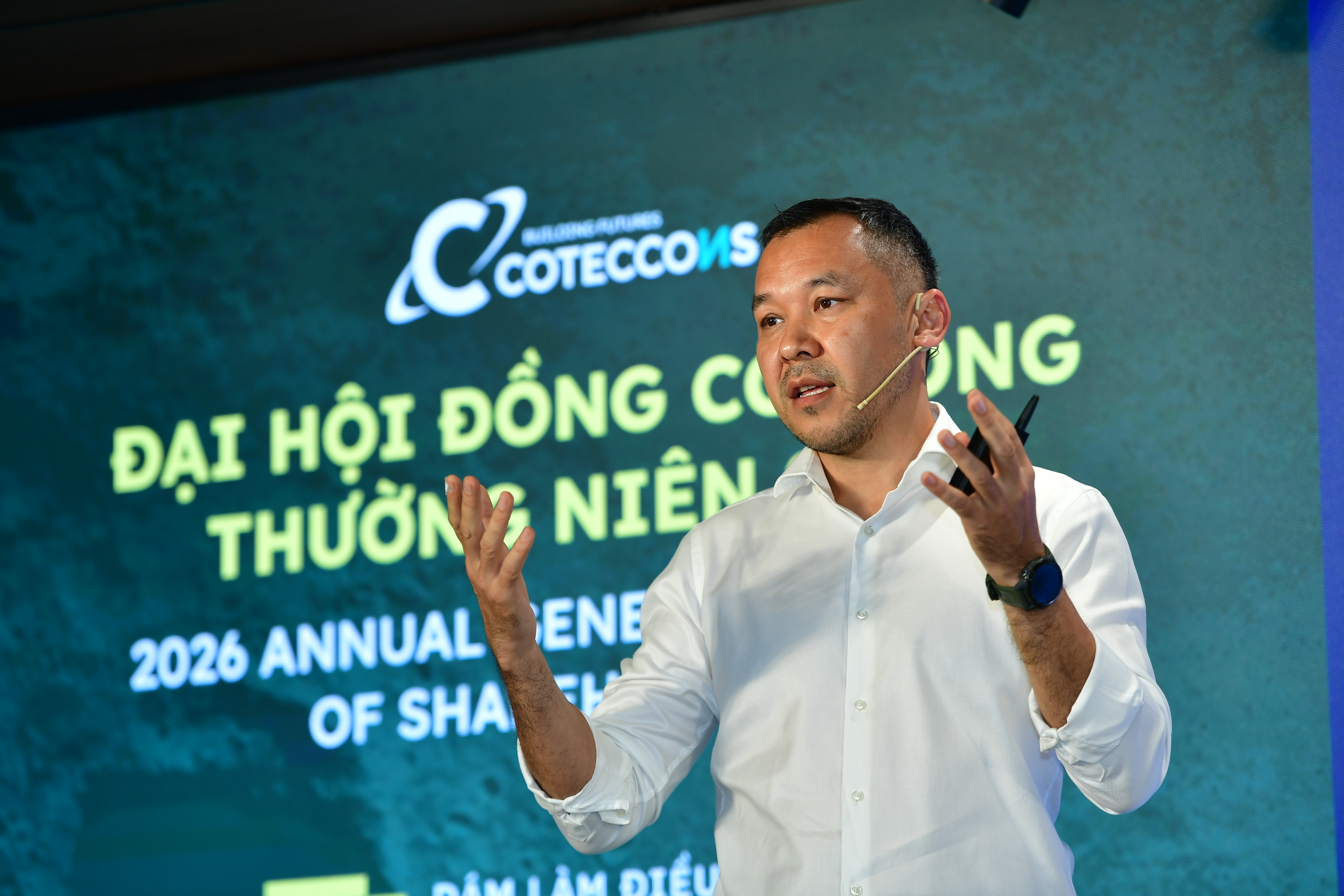
On long-term financial targets, the Chairman of Coteccons emphasized return on equity (ROE). From 10% in FY2026, the company aims for ROE of 15–18% in the period up to 2030.
Backed by its client base, people and market outlook, Mr. Bolat is confident in the company’s ability to sustain profit growth of 20-30% without having to worry about revenue, because when the volume of work is large enough, revenue will certainly follow.
Yet it was precisely at that moment that he began to ask what Coteccons was still missing.
A mountain climb in Tibet and five strategic priorities that emerged at an altitude of 5,000 m
Mr. Bolat recalled that a year ago, when the 2026–2030 development plan was announced, the leadership team was highly optimistic. But behind the plans that generated over VND 34,000 billion in revenue lies the hard daily work of engineers and workers on site.
Amid the prospect of continued 20–30% profit growth in the coming years, he reflected: “If we simply keep growing, with revenue and profit figures continuously rising, are we missing something?”
A few months ago, during a mountain climb in Tibet, carrying the Coteccons logo to an altitude of over 5,000 m, he had the opportunity to reflect on the journey of conquering the summit and relate it to the company’s five strategic priorities.
First, refining governance and standard operating procedures (SOPs). He likened the governance system to oxygen for a mountain climber, an indispensable condition for continuing the journey.
Second, achieving quality growth in the core construction business while developing new growth drivers, much like choosing a suitable, safe and effective route to conquer the summit.
Third, building a strong team, as teamwork and human capability determine the company’s capacity for sustainable operations.
Fourth, leaving the brand’s mark on iconic projects, just as climbers plant flags to mark the milestones they have conquered.
Fifth, developing a partner ecosystem, working alongside subcontractors and suppliers rather than going alone on the development journey.
After the trip, Mr. Bolat became even more confident in the direction Coteccons had chosen. However, he still felt that the strategic picture was missing an important piece.
 Having almost everything, what is Coteccons still missing?
According to the Chairman of Coteccons, the company currently enjoys many favorable conditions: its people, brand, clients, partners and market. The company has also defined the scale, revenue and types of projects it wants to pursue in the long term.
“We have almost everything: we have the team, a good brand, clients, partners, and the market is working in our favor. Are we simply going to continue like this, year after year, doing the same kind of work?”
After many discussions with the executive team, Mr. Bolat believes the time has come for Coteccons to revisit the business model it has pursued for 22 years.
“Perhaps it is time for us to redefine and transform the business model of the construction industry,” he said.
In his view, although the scale and types of projects have become increasingly diverse, Coteccons essentially still operates under the traditional general contractor model. Meanwhile, the company could develop additional specialized products and services based on its engineering capabilities and construction experience.
“Only when we diversify not only the types of construction projects but also our business model, through new product and service lines with higher profit margins, can we truly diversify our revenue streams,” Mr. Bolat emphasized.
Redefining its role, choosing to build a better future together with Vietnam
Looking back over the past five years, Mr. Bolat noted that Coteccons’ revenue structure has changed significantly. Whereas revenue previously came mainly from high-rise buildings, real estate and residential projects, the company has since developed its industrial segment and gradually participated in large-scale infrastructure projects.
In international markets, Coteccons has taken its first steps in the Go Global strategy. However, Mr. Bolat noted that the company needs time to generate significant revenue from overseas and does not expect excessively high margins in the initial phase.
The directions spanning industrial, infrastructure, specialized products, international markets and B2C are all part of the business model transformation plan. But the missing piece he referred to carries a broader meaning: elevating Coteccons’ role in society.
“As a general contractor, Coteccons wants to redefine its role. We want to become a force, a contractor contributing to building a better Vietnam,” he affirmed.
The Chairman of Coteccons said the company wants to contribute to “reshaping and reimagining the living spaces of Vietnamese people”, while continuing to clarify this new role on its development journey to 2030.
Vietnam’s stock market upgraded, yet foreign capital continues to flow out: What opportunities for Coteccons?
Following the strategic address by Chairman of the BOD Bolat Duisenov, the Coteccons AGM moved to the panel discussion “Window of Opportunity for Vietnam’s Capital Market”, featuring two guests: Mr. Johan Nyvene, Chairman of the BOD of Ho Chi Minh City Securities Corporation (HSC), and Mr. Nguyen Quang Thuan, Chairman of the BOD of FiinGroup.
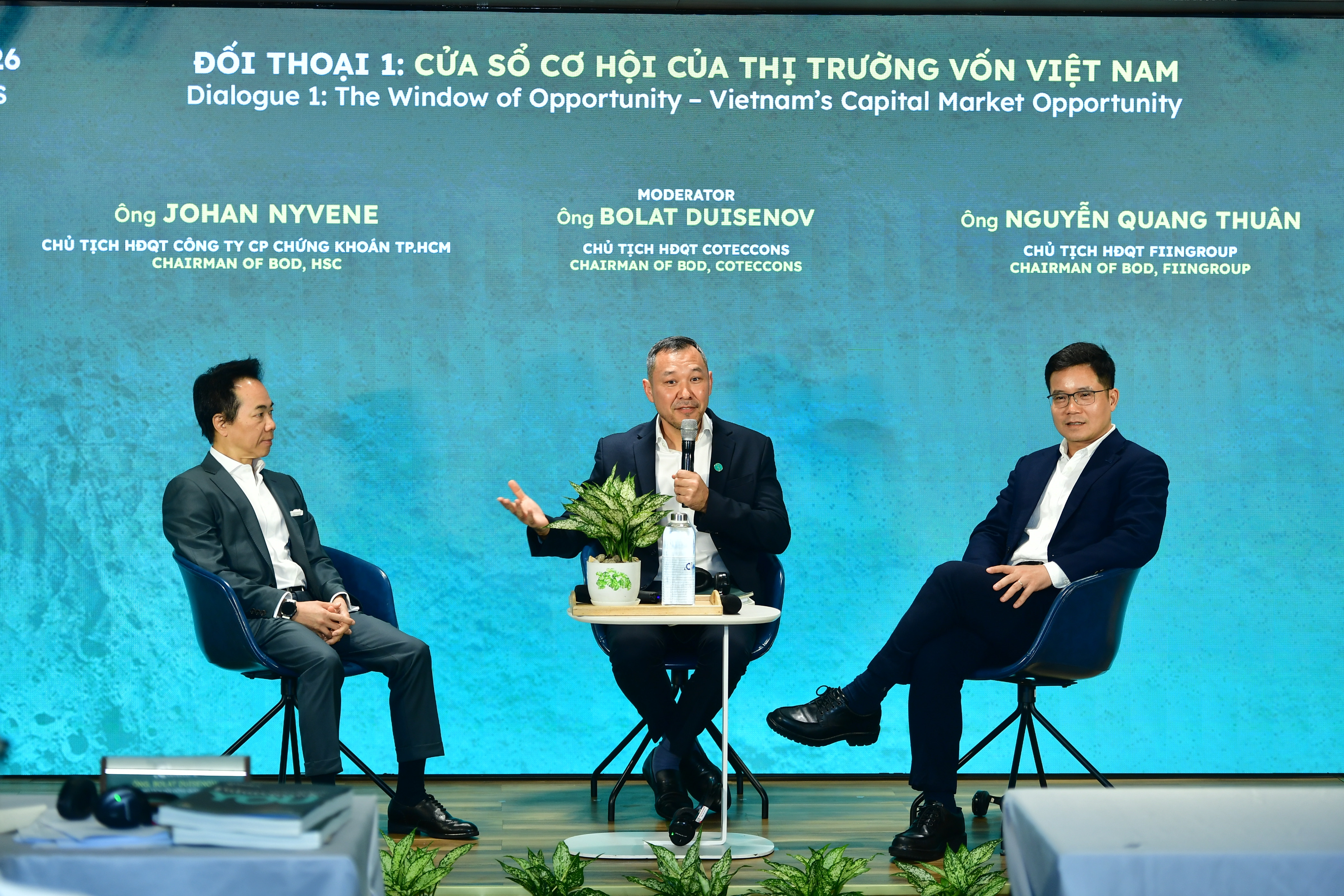
Opening the discussion, Mr. Bolat raised a paradox: Vietnam has just been upgraded by FTSE Russell, yet foreign investors continue to be net sellers and liquidity has declined. Why has the upgrade not yet attracted capital inflows, and how does the foreign ownership limit (FOL) affect this process?
According to Mr. Johan Nyvene, Vietnam’s upgrade from frontier to emerging market status is an important step forward that has been prepared over many years. However, it comes at a time of unusual volatility in global financial markets.
He offered an analogy: Upgrading the market at this time is like having a doctor come to treat a headache while the whole world is suffering from COVID-19. Treating one symptom does not mean the larger problems of the financial markets have been resolved.
According to the Chairman of HSC, investment decisions also depend on market sentiment, expected returns and assessments of country risk. When safe assets already offer attractive yields, investors will demand higher returns to accept risk in emerging markets. Accordingly, the expected return on Vietnamese equities may need to reach around 12–15% to be sufficiently attractive to certain international investors.
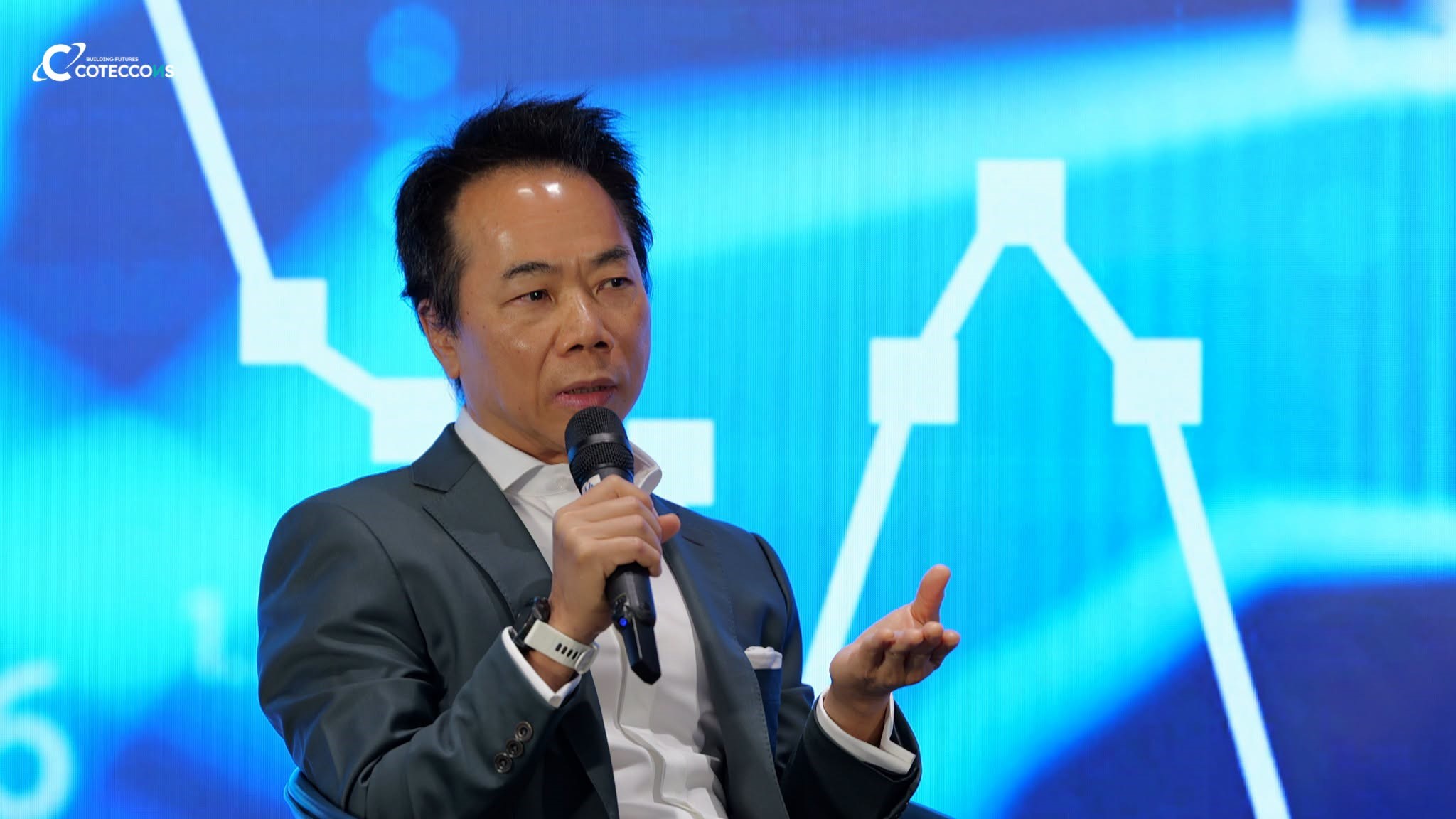 Mr. Johan Nyvene
Moreover, an upgrade does not mean funds will deploy capital immediately. Capital may be allocated in multiple phases, and investors still retain the right not to invest if market conditions are not yet favorable.
“This is one step along the roadmap, not an overnight transformation that makes the market a destination of interest for all foreign investors,” Mr. Johan observed.
Concurring, Mr. Nguyen Quang Thuan further analyzed the difference between two groups of investment funds.
According to him, the 5-year U.S. Treasury yield of around 5.3% at the time referenced is attracting international capital, while many equity funds investing in Vietnam have recorded unfavorable performance.
Furthermore, the market upgrade mainly opens up opportunities for passive, index-tracking funds. Meanwhile, capital withdrawn from Vietnam recently has largely come from active funds, which directly select stocks and determine investment weightings.
According to data tracked by Mr. Thuan, Vietnam’s stock market has recorded approximately VND 24,000 billion in foreign capital outflows since the upgrade. However, excluding several large transactions related to Masan Consumer, the outflow amounts to around half a billion US dollars.
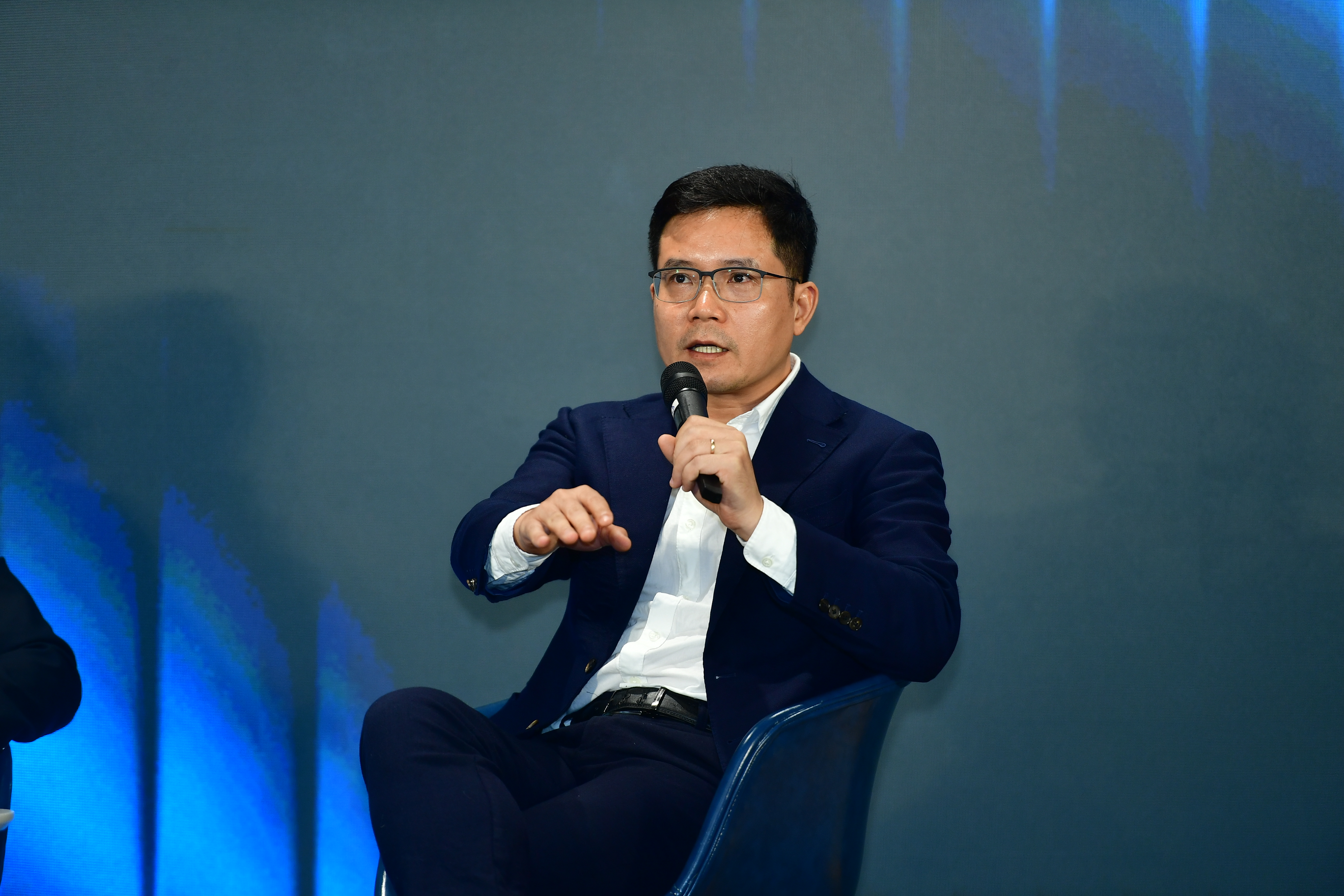 Mr. Nguyen Quang Thuan
The expert emphasized that the upgrade will create additional opportunities, but it will take time for funds to allocate capital. Vietnam must also continue to improve its policies, investment environment and the quality of listed companies.
Regarding the foreign ownership limit, Mr. Thuan noted that FOL (foreign ownership limit) regulations are creating more favorable conditions for companies to access international capital. However, beyond easing the ownership limit, the market needs more high-quality stocks with sufficiently large free float and liquidity for index funds to participate.
Mr. Johan added that Vietnam’s stock market remains heavily concentrated in banking, securities and real estate stocks. Meanwhile, global capital is paying significant attention to technology, AI, automation and robotics, sectors in which Vietnam still lacks prominent listed companies.
Following the discussion, Chairman Bolat concluded that the upgrade is merely the condition that opens the door, while the capital that actually flows into companies will depend on investment returns, reputation, operational capability, transparency and governance quality.
He also emphasized that Vietnam’s stock market has a large proportion of retail investors; therefore, Coteccons needs to pay attention to both domestic shareholders and international institutions.
Regarding Coteccons’ own plan to raise its FOL to 100%, Mr. Bolat said the two experts’ analyses further reinforce the leadership’s confidence in the direction of expanding access to foreign investors over the long term. This is also an opportunity for Coteccons to access more high-quality medium- and long-term capital.
Financial markets ebb and flow like the tide, Chairman Bolat: “When Coteccons goes swimming, it still wears a helmet”
From the market story, Mr. Bolat turned to a more direct question: If international capital begins to be allocated to Vietnam, what must a construction company like Coteccons do to become attractive in the eyes of investors?
According to FiinGroup Chairman Nguyen Quang Thuan, institutional investors are first and foremost concerned with the industry’s growth potential, the company’s position, competitive advantages, governance quality and stock liquidity.
The construction industry in particular is highly competitive with low margins. Therefore, Coteccons must demonstrate what sets it apart, rather than competing purely on price.
“In this industry, an EBITDA margin of around 5–7% is already high; without a competitive advantage, it may only be 3–4%, with a net margin of around 2–3%.”
From the perspective of lending and investing in bonds, financial institutions are particularly concerned with a company’s resilience when the market faces difficulties, because returns on an investment may be limited while the risk of capital loss remains.
Accordingly, Mr. Thuan highlighted Coteccons’ opportunities to expand into industrial and infrastructure projects and serve more foreign-invested enterprises. In his view, international project owners are generally able to pay better prices, but their requirements regarding financial capacity, construction quality and sustainable development are also more stringent.
He cited examples of major corporations such as Samsung or Japanese companies, which may hire independent firms to assess and score contractors’ capabilities before selecting a construction partner.
“They are very wary of entrusting projects worth billions of US dollars to contractors that may not survive until the project is completed.”
In addition to financial capacity, ESG has also become an important requirement, from green building standards such as LEED and EDGE to labor conditions and supply chain management.
Mr. Thuan noted that Coteccons has made efforts in sustainable development, particularly in caring for its workforce. However, the company needs to continue improving environmental and social responsibility factors, especially as its operations involve thousands of subcontractor personnel. ESG must deliver genuine operational effectiveness, rather than merely being presented in attractive reports.
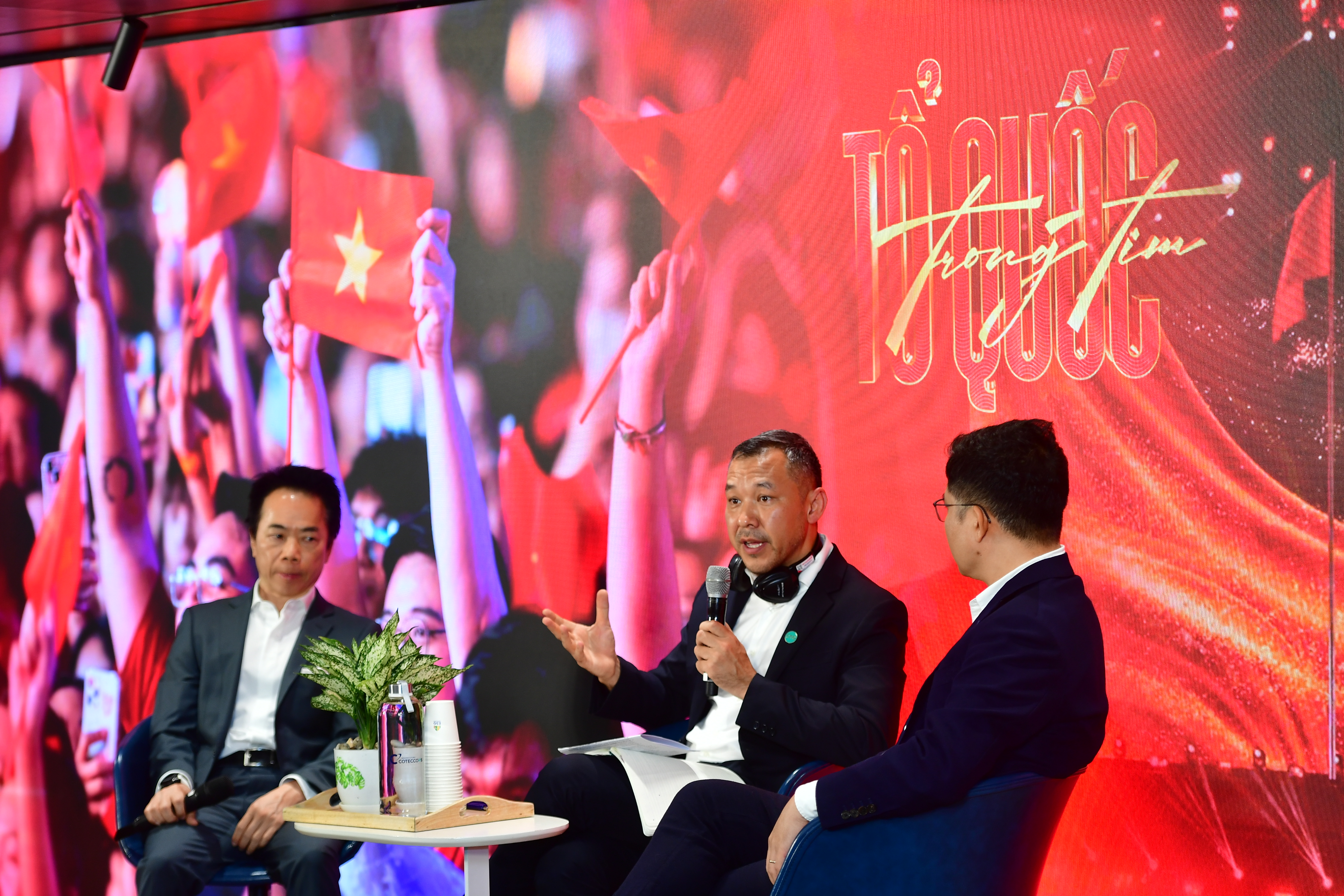 Continuing, Mr. Johan Nyvene brought the discussion to a core concept: trust. “Financial markets in general are also markets of trust.”
To illustrate, the Chairman of HSC cited an analogy he once heard from Mr. Dominic Scriven, Chairman of Dragon Capital: When the tide is high, no one knows who is swimming without trousers. Only when the tide goes out can you see who is still wearing them.
Over nearly 30 years of development of Vietnam’s stock market, Mr. Johan has witnessed many cycles of ups and downs. Many large companies in construction, real estate and finance have faced difficulties when the market reversed.
In that analogy, “wearing trousers” represents corporate governance, operational management, financial control and early risk identification.
For the construction industry, this requirement is even more important because margins are low, while the receivables collection period can extend for hundreds of days or even several years. Mr. Johan linked this to Chairman Bolat’s earlier remark: Completing a project is only half the job; the other half is getting paid.
Hearing this, Mr. Bolat immediately replied with humor: “I want to assure you that Coteccons is also ‘wearing trousers’, and a uniform too. Our keyword is discipline. These days, when we go swimming, we not only wear trousers but also a safety helmet.”
Following the exchange, Mr. Bolat said that in FY2027, Coteccons will strengthen its investor relations (IR) activities, disclose information fully and promptly, and proactively organize more dialogues with domestic and international investors.
Raising the foreign ownership limit to 100%: A smart move by Coteccons as Vietnam needs USD 1.5 trillion in investment capital.
In the final question, Chairman Bolat broadened the discussion to Vietnam’s overall capital needs in the 2026–2030 period.
In his view, development targets for infrastructure, industry and urbanization are creating enormous investment needs. In this context, will the banking system still be able to meet them, and where can Vietnam find long-term capital?
Mr. Johan Nyvene observed that Vietnam’s financial market has long focused heavily on capital flow, that is, which investment channels money is moving between.
However, what matters more is the ability to generate new capital (capital formation).
According to him, Vietnam still lacks many foundational elements for capital market development, leaving bank credit as the primary means of funding for companies.
Bank loans are typically simpler and much faster than issuing shares or bonds to international investors. Meanwhile, raising capital through the market requires a credit rating system, auditing, information disclosure and finance teams capable of developing long-term plans.
Mr. Johan likened developing a capital market to constructing a building: To complete a building, you need a foundation, bricks, steel and a complete structural system.
For financial markets, those “bricks” include credit rating agencies, advisory firms, debt and equity products, as well as a legal framework and transparent information.
He cited the example of Ho Chi Minh City considering the development of municipal bond products to mobilize investment resources. However, to access international investors, the issuer must clearly demonstrate the source of debt repayment, have audited records and meet credit rating requirements.
“You cannot simply say, ‘Trust me, I will repay the debt.’ That does not work when you enter international capital markets.”
Another challenge is the cost of capital. According to the expert, with U.S. Treasury yields at around 5.3%, raising USD on international markets cannot simply apply the 3–4% benchmark of VND-denominated Vietnamese government bonds.
Vietnam also needs to develop credit benchmarks and continue improving its sovereign credit rating to attract a broader range of investors.
Following on, Mr. Nguyen Quang Thuan estimated that from now until 2030, Vietnam will need around USD 1.5 trillion in investment capital, equivalent to USD 300 billion per year. This scale exceeds the capacity of the banking system alone. Developing the capital market is therefore an urgent requirement to meet the needs of the economy.
He cited the renewable energy sector as an example: A wind power project may take around 12 years to recoup its investment, but if it is financed only with 3–5-year loans, the company risks facing difficulties even while the project is operating and generating cash flow.
Relating this to Coteccons, Mr. Thuan said that drivers such as infrastructure investment, urbanization, industry and FDI inflows will open up many business opportunities. However, he also warned of the risks if a company increases output too quickly without controlling its receivables.
The expert posed a direct hypothetical: Coteccons may achieve its revenue target of VND 42,000 billion, but if receivables increase by an additional VND 10,000–15,000 billion, the company will face significant financial pressure.
Therefore, the selection of clients and project owners, schedule management and, in particular, the ability to collect payment must be given equal weight to growth targets.
According to Mr. Thuan, Coteccons’ opportunities lie not only in residential construction but also in infrastructure, port and airport projects, as well as in serving foreign-invested enterprises. However, the company needs to focus on areas where it can leverage its competitive advantages, rather than spreading its resources across too many directions.
He emphasized: “Growing fast is easy, but achieving quality growth is hard.”
The expert also offered a candid observation on Coteccons’ plans: “The direction has been set out correctly. The question now is whether it can be delivered. Coteccons and all of us shareholders will follow and monitor it together.”
Concluding the panel, Chairman Bolat Duisenov closed with a commitment to continue delivering on the set targets through the capabilities of the company’s engineering team and operating system.
20 direct questions about Coteccons’ future
Continuing the program, at 10:44 a.m., the Coteccons AGM moved into its second dialogue session themed “Building the Future - Coteccons Ready for a New Chapter of Growth”.
The session was moderated by Ms. Nguyen Trinh Thuy Trang, Deputy CEO – Operations of Coteccons, with the participation of Mr. Bolat Duisenov – Chairman of the BOD; Mr. Vo Hoang Lam – Member of the BOD, Deputy CEO and CEO of BU1; Mr. Pham Quang Vu – Member of the BOD; Mr. Nguyen Chi Thien – Deputy CEO; Mr. Tran Ngoc Hai – Deputy CEO – Commercial; Ms. Nguyen Thi Thanh Huong – Human Resources Director; and Mr. Nguyen Hong Son – Deputy Chief Financial Officer.
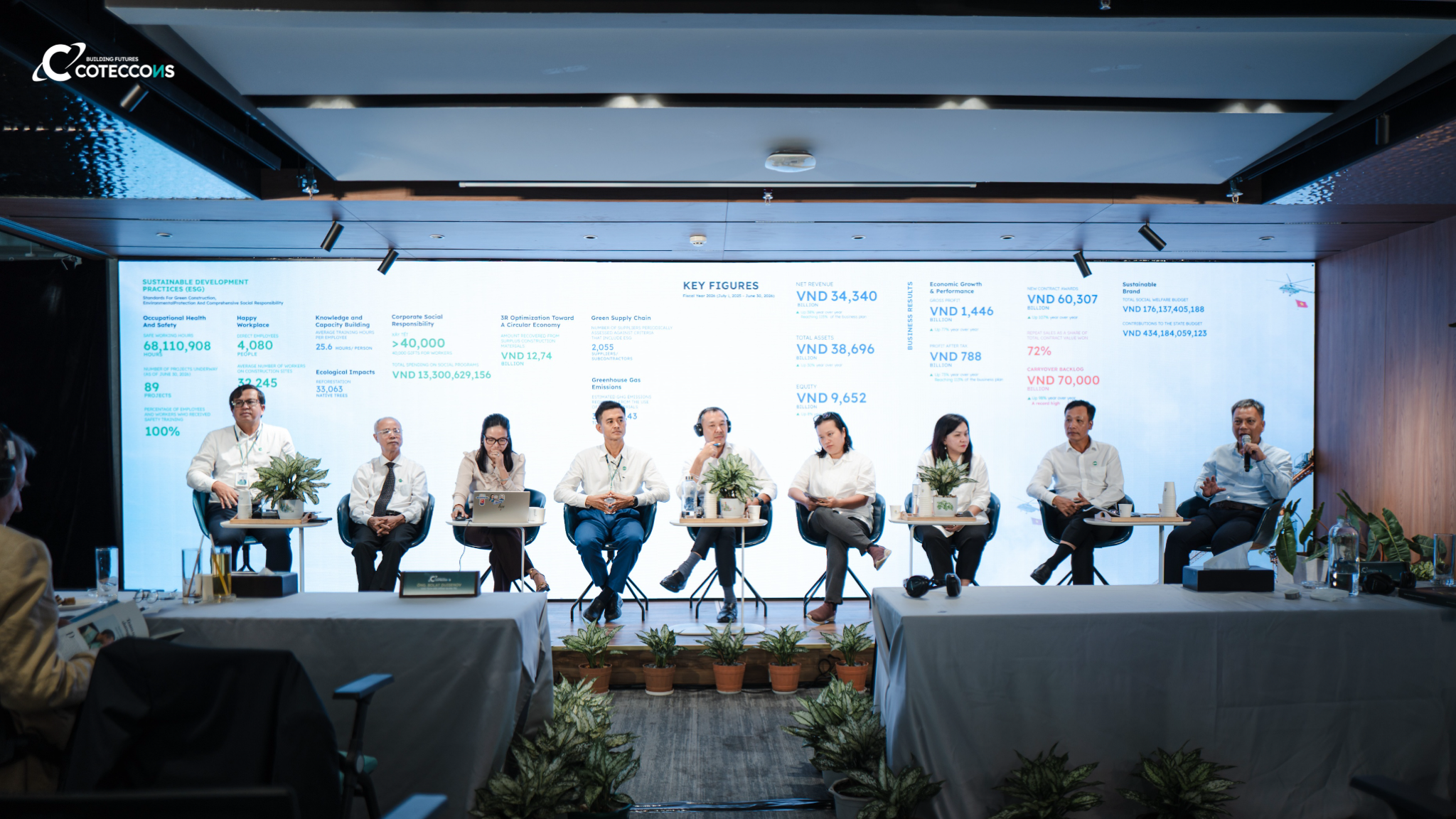 Instead of conventional presentations, Coteccons dedicated around two hours for its leadership to engage in direct dialogue, answering questions from shareholders, investors and the media across six topic groups: macroeconomics and the market; finance and capital efficiency; risk management; long-term strategy; foreign ownership limit (FOL) and shares; ESOP and human resources.
Despite running until nearly 1:00 p.m., the second dialogue session continued to attract a large number of in-person attendees and online viewers, reflecting the strong interest of shareholders, investors and the public in the development strategy and future of one of Vietnam’s leading construction companies.
Two railway packages worth approximately VND 7,000 billion and an affirmation: Coteccons has no shortage of work
Question: Going forward, what revenue structure does Coteccons target between infrastructure construction and other segments?
Mr. Bolat Duisenov said that in FY2027, the company aims for approximately 50% of revenue from segments other than residential construction, including industrial, infrastructure, and specialized products and services.
This ratio aims to maintain a balanced revenue structure, reduce dependence on any single segment and manage long-term risk.
When Ms. Nguyen Trinh Thuy Trang further asked whether Coteccons would decline projects that cause its revenue structure to deviate from the 50% target, Mr. Bolat explained that this is not a fixed limit. The company still considers and prioritizes opportunities with good margins, but will ensure long-term balance for risk management and sustainable development.
“We do not want to chase short-term gains. As Johan said, when the tide goes out, the trousers are gone, right? We must be fully dressed, in uniform, so we still have to maintain balance,” the leader of Coteccons concluded his answer with humor.
Question: What percentage of Coteccons’ revenue do factories and data centers contribute? How do the margins of these two segments compare with other construction segments?
Mr. Vo Hoang Lam said these two segments contributed approximately 15% of total revenue in FY2026.
Coteccons focuses on factories with high technical requirements, reputable project owners and projects that leverage its distinctive strengths. He cited the GE Vernova project in Hai Phong, which has stringent requirements similar to those of the LEGO project Coteccons previously delivered.
“I would also add that, thanks to our investment in our team and our capability to execute and deliver factory projects, reputable project owners such as LEGO have appointed Coteccons through direct negotiation for their subsequent phases. This also shows that our direction is the right one.” 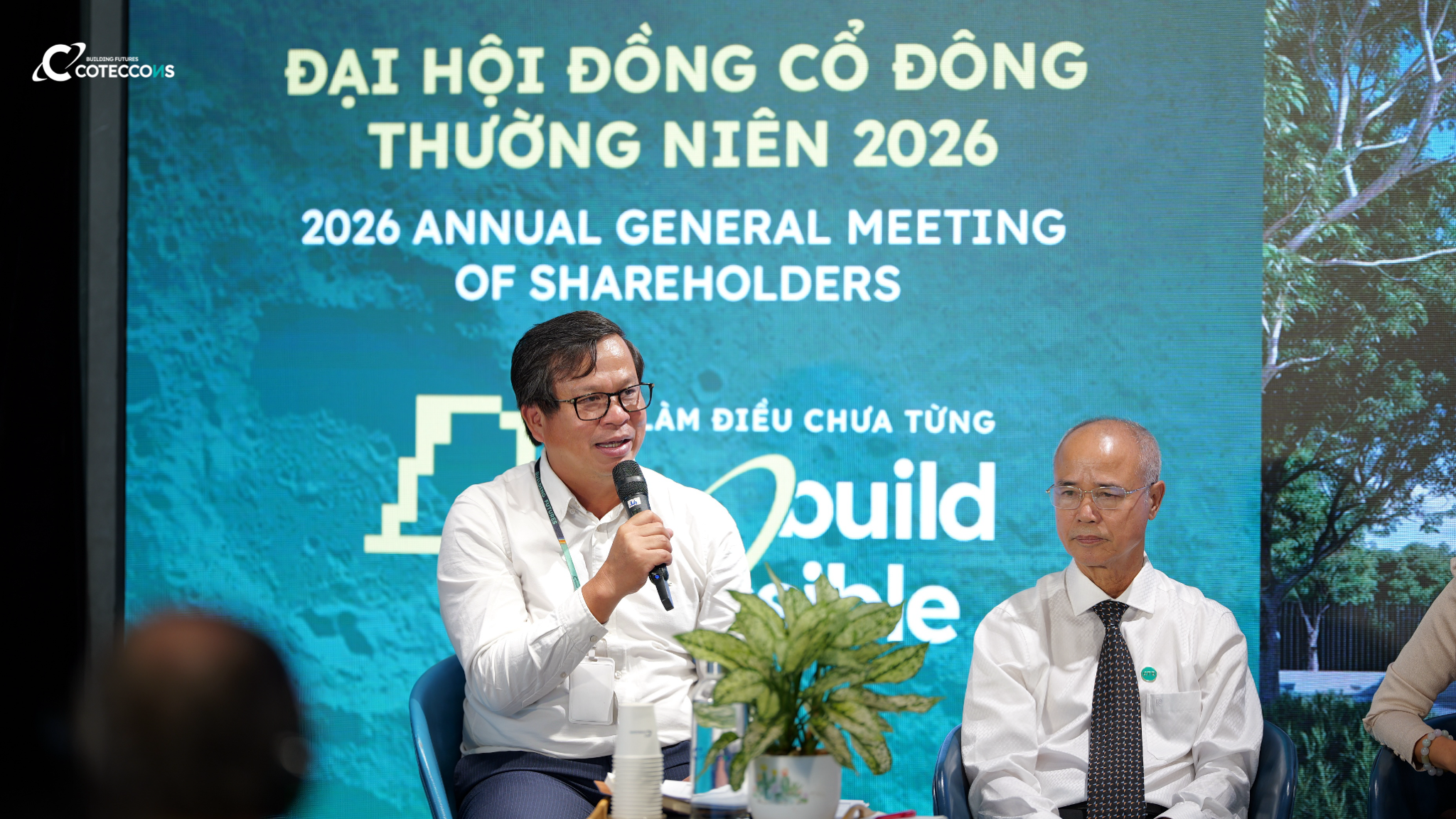
Mr. Vo Hoang Lam
In the data center segment, the company has trained its team in several overseas markets, delivered projects domestically and one project in Georgia.
However, Mr. Lam emphasized that Coteccons does not assume factories or data centers have higher margins than residential projects. Financial performance depends on technical conditions, execution capability and the agreement with each client.
In response to Ms. Trang’s follow-up question on the risks of entering new segments, he said: “Coteccons may be new to these fields, but it is not a startup.”
According to him, the company has nearly 600 MEP engineers, placing it among the companies with the largest MEP engineering teams in Vietnam. At the same time, regardless of the segment in which it delivers projects, the company has the ready backing of its governance, human resources, engineering, supply chain, audit and risk management systems to develop new projects.
Question: Amid increasingly fierce competition in residential construction, how does Coteccons assess the market and its advantages?
Mr. Nguyen Chi Thien acknowledged that in the past, the company had suffered significant losses from taking on projects without adequate risk assessment.
Therefore, Coteccons currently does not accept contracts at any price, but aims for reasonable pricing that benefits both parties. “Coteccons has a very large volume of work. Many people think our prices are high, but in reality, they are very reasonable.”
For large-scale, complex projects, project owners choose Coteccons because they trust its ability to mobilize manpower and equipment, meet technical requirements, and ensure safety and schedules. “These are advantages that not every contractor can offer,” Mr. Thien emphasized.
Question: A question for Mr. Nguyen Chi Thien: After a series of real estate projects had their legal obstacles resolved and accelerated implementation in the first months of the year, how does Coteccons assess the growth in the construction industry’s workload from now until 2027? Which segments are generating the greatest demand for construction companies?
Mr. Nguyen Chi Thien said the company’s backlog has reached approximately VND 70,000 billion.
“At present, we truly have no shortage of work. If we wanted to increase output, we could do more,” he affirmed.
However, the company is firmly committed to not pursuing revenue growth at all costs, and sets stringent criteria when selecting clients and projects, from payment terms and cooperation history to the project owner’s legal standing.
In addition to its existing contracts, Coteccons is approaching several very large-scale projects, which are expected to continue adding significantly to its backlog in the coming period.
Assessing the outlook for the construction industry in 2027 and beyond, Mr. Thien pointed to two main growth drivers. First, the supply of quality housing still falls short of market demand. Second, the State’s policies promoting public investment and infrastructure development are generating a large volume of work for construction companies.
Citing Q3 economic data, he noted that GDP grew by about 10%, with the industry and construction sector growing by more than 12% and contributing over 50% of the economy’s overall growth.
Based on these factors, Mr. Thien expects the construction industry to continue to have ample work and maintain a positive growth outlook in 2027 and the following years.
Adding to the answer, Coteccons’ Chairman of the BOD Bolat Duisenov said that over the past four years, the company has maintained an average growth rate of about 30% per year and is currently operating at nearly 100% capacity.
“If we think of Coteccons as a machine, a vehicle, then we have reached nearly maximum speed. In terms of scale of operations, we already have the scale; it is enough,” Mr. Bolat emphasized.
In his view, having reached sufficient scale, Coteccons’ priority is no longer simply expanding output but optimizing operational efficiency. The current scale gives the company greater leverage in negotiations with suppliers, enables proactive nationwide logistics management, and allows cost control at stages where this was previously not feasible.
This is also the basis on which the Chairman of Coteccons expects profit growth of 20–30% per year in the coming years, without necessarily maintaining a corresponding rate of revenue growth.
He offered an analogy: Coteccons has hunted down big game, meaning it already has sufficient scale and workload. The next challenge is how to harness those resources to generate the highest value and profit.
With its existing contracts and potential projects, CTD’s focus in the coming period will be on improving engineer productivity, applying AI, controlling costs and improving margins.
“Revenue will come. The main task in the coming years is to continuously enhance the company’s profits through optimization”, Mr. Bolat affirmed.
Question: How many packages is Coteccons participating in on the Ben Thanh – Can Gio railway project, and what is the implementation progress? Does the company plan to participate in other metro lines? What strengths does Coteccons have to undertake the complex components of urban railway projects?
Mr. Nguyen Chi Thien said the company has signed construction contracts for two packages on the Ben Thanh – Can Gio high-speed railway, with a total value of approximately VND 7,000 billion. The scope of work includes special bridges and several viaducts along the line, in addition to the approach bridge system in the Binh Khanh and Nha Be areas.
Notably, in early October 2026, Coteccons completed casting the first prototype girder for the project. According to Mr. Thien, this is an important milestone, marking the learning process, accumulation of technical capabilities and construction preparation of the Coteccons team in the high-speed rail sector.
Coteccons has many years of partnership with Vingroup and is proud to be entrusted by the project owner with components that require a high level of technical capability, construction organization and quality control.
In addition to the Ben Thanh – Can Gio line, Coteccons has also participated in the Hanoi – Quang Ninh high-speed railway project. For metro projects, the company is approaching and working with several clients but has not yet announced any specific contracts.
According to Mr. Thien, gradually participating in high-speed railway projects not only opens up a new business segment but is also an opportunity for Coteccons to enhance its construction capabilities, accumulate experience and contribute to the development of Vietnam’s transport infrastructure.
With nearly VND 7,800 billion in deposits, why does Coteccons still borrow over VND 4,000 billion?
Question: Mr. Nguyen Hong Son, bank deposits stand at nearly VND 7,800 billion, while short-term borrowings exceed VND 4,000 billion. Is it cost-effective to hold deposits and borrow at the same time?
Mr. Nguyen Hong Son said it is necessary to look at long-term capital management objectives, rather than simply comparing borrowing costs with deposit interest.
Currently, Coteccons is building a balanced capital structure across short, medium and long terms. In addition to over VND 4,000 billion in short-term borrowings, the company has issued VND 1,400 billion in 3-year bonds. The aim is to maintain about 30% short-term capital and 60–70% medium- and long-term capital, creating a stable financial foundation for at least the next 3–5 years.
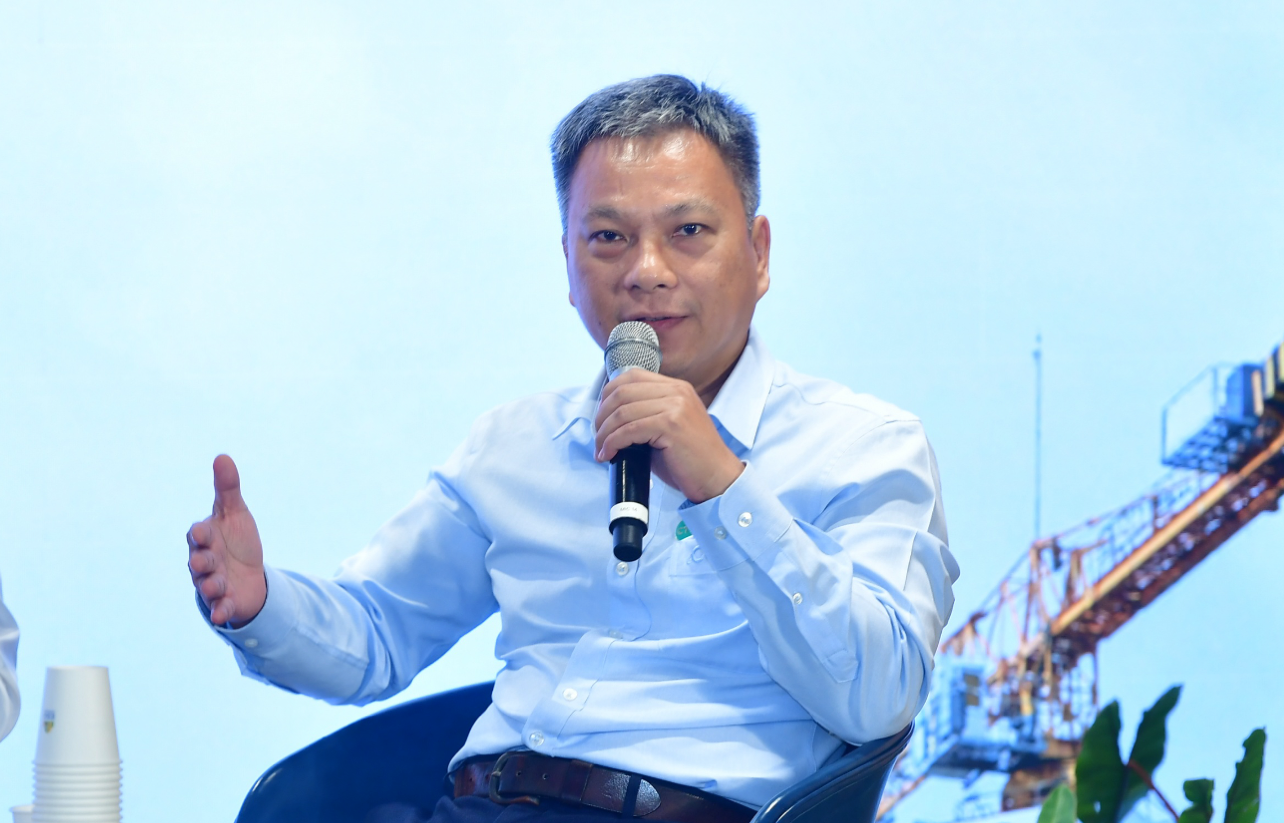 Mr. Nguyen Hong Son
More importantly, Mr. Son emphasized that holding deposits while borrowing from banks also aims to build Coteccons’ credit history and reputation in the capital market, rather than relying solely on traditional bank financing.
“Coteccons does not follow the traditional approach, which is keeping money in your pocket, known only to your own household, with no one knowing you have money and no one allowed to touch it. That is a very old-fashioned way of behaving, not how a modern company operates,” Mr. Son remarked.
According to him, proactively maintaining credit relationships, fulfilling financial obligations and demonstrating discipline in capital use help Coteccons build credibility with financial institutions. As a result, the company can gradually diversify its funding sources into bonds and capital market instruments.
“We cannot wait until we need capital and then rush to say, ‘I am A, I am B’; no one will believe us because we have no track record in the market,” he emphasized.
At the same time, maintaining a large cash balance helps Coteccons manage liquidity proactively and maintain operational flexibility. According to Mr. Son, the company’s quick ratio is currently close to 1, while its current ratio stands at about 1.4, a level he considers very high for the construction industry.
He also noted that FiinRatings has rated Coteccons BBB+ for at least six consecutive periods, a level he considers among the highest for Vietnamese construction companies.
Adding to the answer, Ms. Nguyen Trinh Thuy Trang said the Finance Business Partner function supports business units in controlling key financial indicators, from credit ratings and inventory to borrowing limits. The goal is to maintain financial discipline, enabling the company to expand its operations while keeping risks under control.
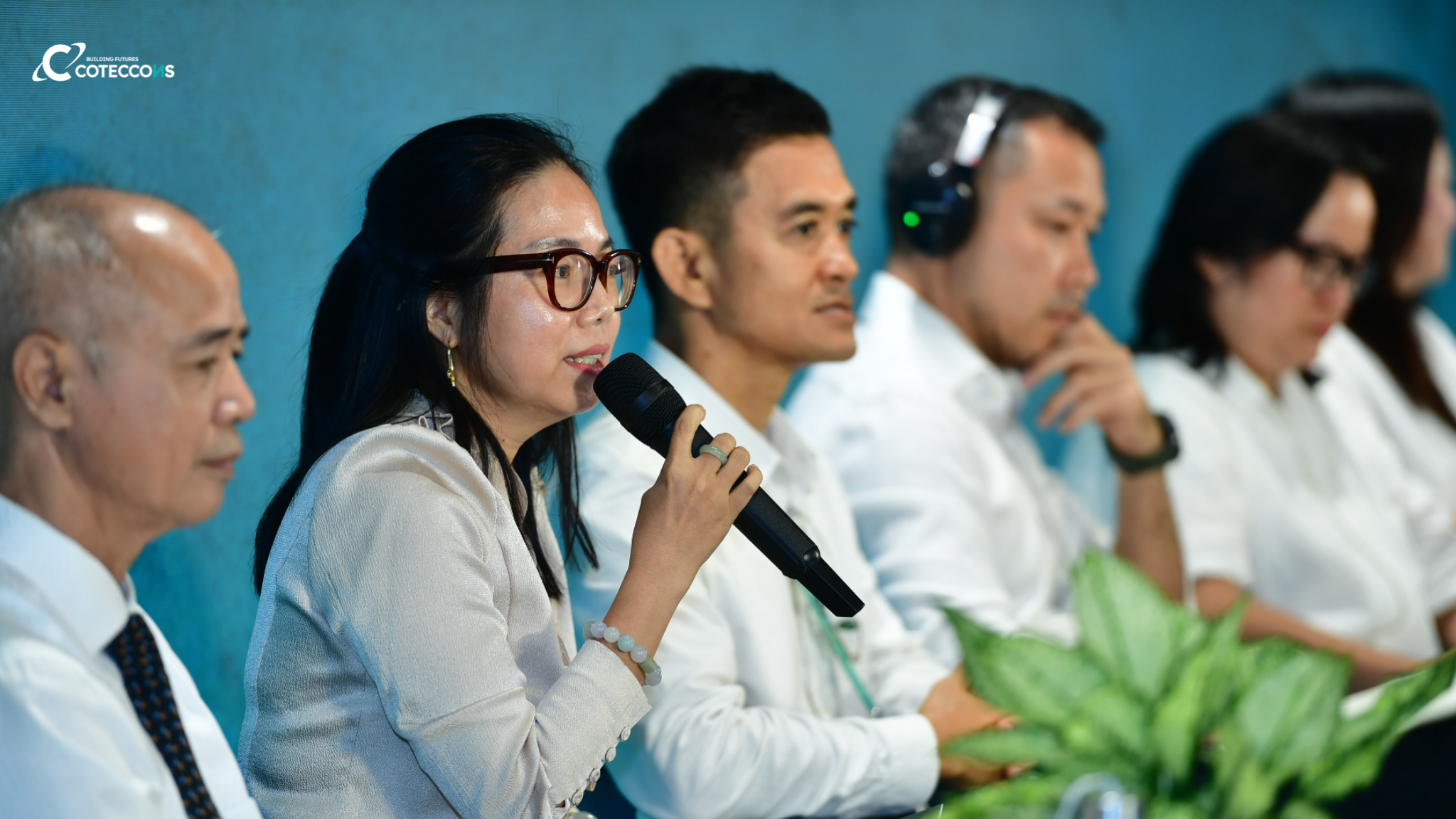 Ms. Nguyen Trinh Thuy Trang
Mr. Nguyen Hong Son cited the effectiveness of this strategy in the company’s international expansion. For the first time, Coteccons has gained access to bank guarantees and working capital financing in overseas markets for its subsidiaries.
Specifically, the company has achieved this in Taiwan and Georgia, and is now targeting the Kazakhstan market.
According to Mr. Son, this is an important step forward, as obtaining guarantees and loans from international financial institutions, especially in demanding markets such as Taiwan, is far from simple.
Question: Could the management provide more details on gross margin in Q1 and the impact of construction material prices during the quarter? What negotiations on materials has Coteccons conducted for the coming quarters?
Mr. Nguyen Hong Son: Preliminary Q1 FY2027 results show revenue of over VND 11,000 billion, equivalent to 27% of the annual plan, and profit after tax of over VND 300 billion, achieving nearly 29% of the target.
Notably, gross margin has exceeded 5%, a significant improvement from the previous level of 3–4%. This result reflects the effectiveness of tightened operational discipline, cost optimization and improved project quality.
Mr. Son also emphasized that Coteccons does not pursue revenue at all costs. In FY2026, the company collected nearly VND 40,000 billion, higher than its recognized revenue. In Q1 FY2027 alone, cash collected is estimated at around VND 13,000 billion, exceeding revenue of over VND 11,000 billion.
Regarding material price fluctuations, Mr. Tran Ngoc Hai, Deputy CEO – Commercial of Coteccons, said the market in Q1 was relatively stable. Although there were some localized fluctuations, the impact on construction costs was not significant.
As procurement costs can account for up to 70% of revenue, Coteccons is leveraging its scale to strengthen its negotiating power, control input prices and protect margins.
The company has developed a network of strategic domestic and international suppliers, opened a procurement office in China and established a dedicated logistics department. Instead of simply placing orders and receiving materials on site as before, Coteccons is now more deeply involved in the procurement, transportation and distribution of materials.
Mr. Hai believes that controlling the entire procurement process and project operations will help the company mitigate the impact of material price fluctuations and maintain margins as planned.
Adding to the answer, Ms. Nguyen Trinh Thuy Trang, Deputy CEO – Operations of Coteccons, said that materials and supply chain management was a major challenge for the company 2–3 years ago, but has since gradually been brought under control.
Currently, Coteccons is pursuing an approach of solving problems within its own operations, turning proven solutions into new capabilities, and eventually developing them into products or services that can deliver value to other companies.
Question: Mr. Hong Son, retained earnings have risen to over VND 1,700 billion. How does the company plan to use this amount? What sources currently finance its working capital? Why has the company chosen to retain earnings rather than take on long-term borrowings?
Mr. Nguyen Hong Son affirmed that retaining earnings aims to strengthen equity, enhance financial capacity and create room for long-term development.
According to him, thanks to its solid equity base, Coteccons has been granted total unsecured credit facilities of up to USD 1.5 billion by banks in Vietnam. In addition, accumulated capital enables Coteccons to proactively seize investment opportunities as they arise, such as the deal with Sinh Nam, rather than having to spend time arranging resources.
However, Mr. Son emphasized that Coteccons does not intend to retain all profits in every case. When business results are favorable and access to credit is assured, the company may distribute profits to shareholders. This year, Coteccons is proposing a dividend payout of up to 25%.
Regarding working capital, he said the company combines three sources: equity, short-term borrowings and long-term borrowings. Equity is used prudently due to its high cost of capital.
The nature of the construction industry requires general contractors to maintain ample working capital, as project owners’ payment schedules are not always aligned with construction progress. When cash flow delays occur, financial strength enables Coteccons to continue project execution without disruption.
Flexibly balancing borrowings and equity, as well as short-term and long-term capital, is key for Coteccons to ensure liquidity, strengthen its credibility with banks and investors, and stand ready to seize new growth opportunities.
Question: Planned FY2027 revenue of VND 42,000 billion is nearly 50% higher than in 2017, yet the target profit after tax of VND 1,050 billion remains about 36% below the historical peak of VND 1,653 billion. Does Coteccons aim to surpass its previous profit peak, and how many years will it take?
Mr. Vo Hoang Lam acknowledged that this is also a major expectation of shareholders, as business performance is always an important measure when evaluating a company.
However, according to Mr. Lam, the economic context and business environment have changed considerably over nearly a decade. Whereas economic cycles used to last many years, macroeconomic and international market volatility can now occur quarter by quarter, directly affecting a company’s ability to plan revenue and profit.
Therefore, Coteccons has chosen a prudent planning approach, carefully assessing external factors and prioritizing stable, sustainable growth rather than chasing short-term targets.
Mr. Lam also noted that current profit margins should not be compared solely with the peak period nearly 10 years ago without considering the change in scale. In FY2026, Coteccons’ revenue exceeded VND 34,000 billion, the highest in the company’s history and far beyond the sub-USD 1 billion revenue scale of the earlier period.
In his view, although the profit margin on revenue is no longer as high as before, a larger scale of operations and continued growth in absolute profit remain important factors in evaluating business performance.
Mr. Lam affirmed that the executive team will continue to pursue growth in both revenue and profit in FY2027 and subsequent years, with a growth rate he cited at around 20–30%.
VND 526 Billion Receivable from Tan Hoang Minh and VND 1.4 Trillion in Doubtful Debts
Question: Mr. Tran Ngoc Hai, how does Coteccons currently manage the sorting, transportation and treatment of construction waste on site?
Mr. Tran Ngoc Hai emphasized that the company places compliance with the law and environmental standards as its top priority, including for work performed by subcontractors.
Accordingly, Coteccons has established a process to assess the capabilities, legal documentation and operating methods of waste treatment service providers. During implementation, the company regularly conducts inspections and audits to ensure partners comply with legal regulations and internal standards.
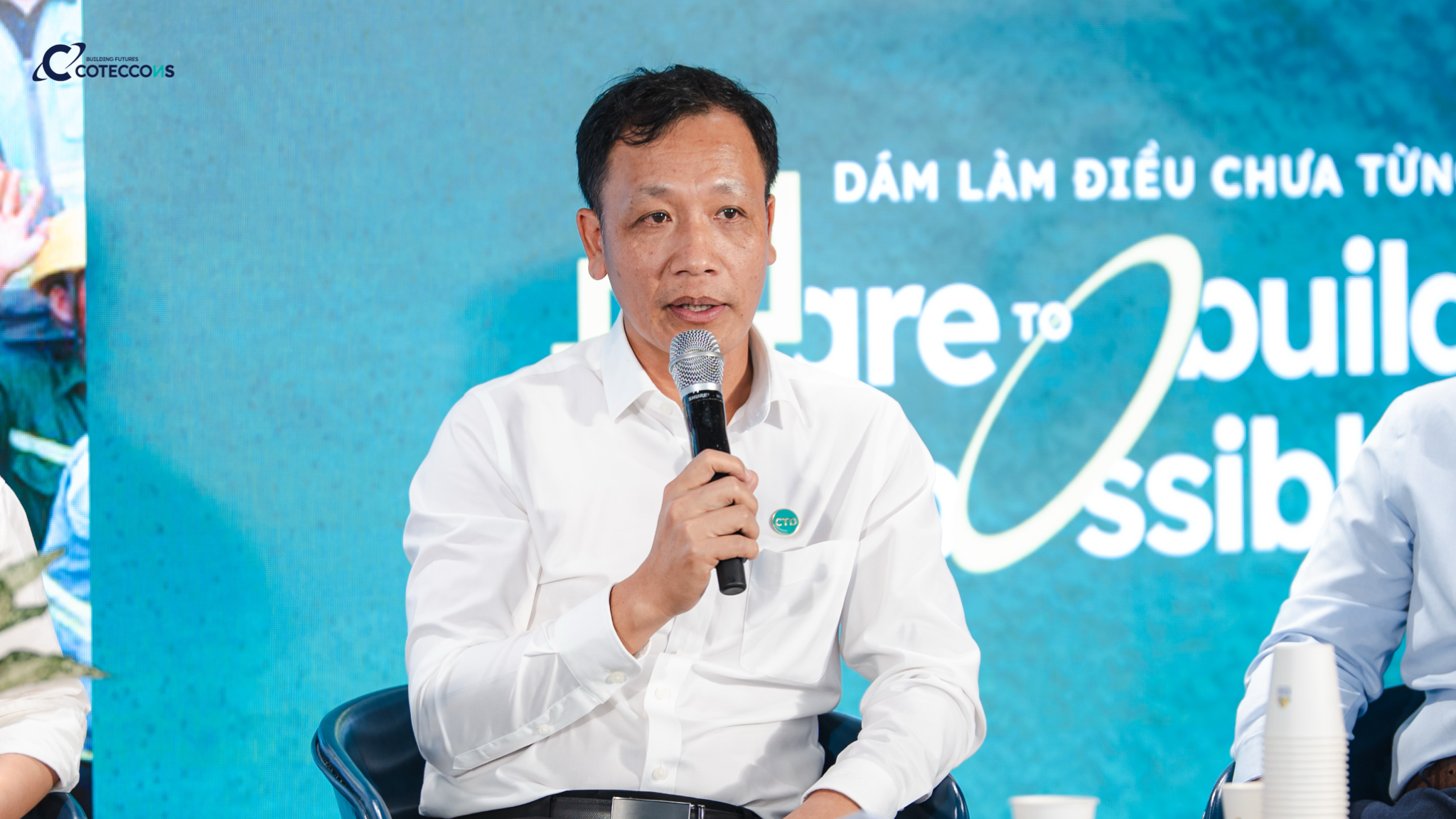 Mr. Tran Ngoc Hai
In addition, Coteccons applies ESG criteria to minimize waste on site, with specific measurement indicators that are updated in its annual report.
“We believe that our commitment to compliance cannot be traded off for cost savings or higher profits. This is the company’s responsibility to society and the environment,” Mr. Hai emphasized.
Question: Mr. Vo Hoang Lam, what evidence shows that ESG is creating real business value and competitive advantage for Coteccons, or is it merely a branding story?
Mr. Vo Hoang Lam said the company is one of the pioneers in practicing ESG in the construction industry and is very pleased to see this trend spreading to many other contractors.
However, ESG is only truly meaningful when measured by concrete actions and results, rather than stopping at communications or image-building efforts.
At Coteccons, ESG is integrated into the entire business and operational process, from the selection of clients, suppliers and subcontractors to risk management, labor conditions and employee policies. The effectiveness of ESG practices must be reflected in the quality of project delivery, operational capability and the value created across the entire supply chain.
In particular, Mr. Lam emphasized that ESG is one of the most important criteria when foreign-invested project owners select contractors. In his view, practicing ESG in a substantive way has helped build credibility, enabling Coteccons to enhance its competitive advantage and become the preferred choice of many interna clients.
Adding to the answer, Ms. Nguyen Trinh Thuy Trang said the company pays particular attention to avoiding greenwashing, that is, using environmental and social activities to polish its image without creating real value.
Coteccons encourages shareholders to directly question and monitor the implementation of its ESG commitments. Measurement indicators and transparent reporting serve as the basis for verifying effectiveness, ensuring that sustainability activities do not exist only on paper.
“We very much hope shareholders will ask many questions, scrutinize and challenge us to ensure that we are not greenwashing. Reported data and indicators are very important benchmarks to avoid that.”
Question: When will the approximately VND 526 billion related to Tan Hoang Minh be recognized in business results? Will the company receive this amount in cash or through offsetting with assets or real estate?
Although this question has been answered publicly many times, Mr. Bolat Duisenov reconfirmed that the two parties have reached an agreement for payment in cash, in Vietnamese dong, rather than offsetting with assets or real estate.
However, Coteccons will only recognize this amount in its business results once payment is actually received from Tan Hoang Minh. The company has also not included this recovery in its FY2027 business plan.
“We have very strict principles and discipline in planning, including in the plan only what is 100% within our control,” Mr. Bolat emphasized.
According to the Chairman of Coteccons, recent developments are a positive signal, as the two parties reached consensus through dialogue, in a spirit of respect and cooperation, avoiding unnecessary tensions.
Adding to the answer, Mr. Nguyen Chi Thien revealed that Tan Hoang Minh has returned to the market and is implementing several new projects. On the basis of goodwill from both sides, he hopes Coteccons and Tan Hoang Minh can continue to cooperate on future projects.
Question: Ricons has lost its public company status, making it more difficult for Coteccons to divest its nearly 15% stake. How does the company plan to divest, and what are its expectations for recovering this investment?
Mr. Bolat Duisenov – Chairman of the BOD said Coteccons’ consistent position on this investment over many years remains unchanged.
Specifically, the company sees no long-term benefit in holding shares without representation on Ricons’ BOD, while also not sharing the same business direction and philosophy.
Coteccons continues to seek divestment, but Mr. Bolat has not disclosed a specific method or timeline. This position may only change if new conditions emerge that bring more appropriate benefits.
Question: Provisions for doubtful debts stand at nearly VND 1,400 billion. In the coming year, are there any amounts that could be recovered and reversed, apart from the VND 526 billion from Tan Hoang Minh?
Mr. Nguyen Hong Son said Coteccons’ first priority is to prevent any new bad debts from arising.
“If we grow but end up generating bad debts, all of those bad debts will wipe out our profits,” he warned.
According to Mr. Son, projects Coteccons has undertaken since 2023 have not generated any new bad debts requiring recognition.
With approximately VND 1,400 billion in provisions from legacy projects, the company maintains a debt recovery team, ready to pursue recovery over many years.
“The company’s firm direction remains to recover these debts in full. But we will also focus on quality growth in our core activities and not let one-off transactions distract us from that focus. Because if people hear about the very large VND 500 billion amount, they may forget our target of VND 1,050 billion.”
Not going overseas to compete on low prices, Coteccons’ Chairman makes a surprising remark when asked about VinCons
Question: Mr. Bolat, which overseas markets and segments are most attractive to Coteccons?
Mr. Bolat Duisenov – Chairman of the BOD: The Go Global strategy is not simply about expanding geographic presence or securing more contracts overseas.
In his view, each country has its own characteristics, requiring an appropriate market entry strategy. Coteccons prioritizes projects that leverage its strengths in engineering talent, construction capability and building technology, especially important, iconic projects or those in the technology infrastructure sector.
In the Go Global strategy, from the very first projects, the company must demonstrate its true capabilities to establish its position and set higher expectations among international clients. If it only chooses simple work, Coteccons will find it difficult to build differentiation and long-term credibility.
“We do not want the story of Coteccons going global to be just that of a new contractor entering the market, doing everything local contractors are already doing and willing to offer lower prices”, Mr. Bolat affirmed.
Beyond business expansion, the Go Global strategy also aims to help Coteccons access advanced construction standards, gain international experience, and bring new knowledge and technologies back home to enhance its domestic construction capabilities.
However, Mr. Bolat noted that establishing representative offices or entities, or delivering projects overseas, must be accompanied by rigorous risk management. Coteccons has chosen to proceed cautiously, step by step, rather than expanding aggressively and then facing mistakes that are difficult to rectify.
Adding to the answer, Ms. Nguyen Trinh Thuy Trang said the company does not focus on announcing which country is most attractive, but rather on the real value gained from each market: whether a project helps build new capabilities, raise construction standards and create a foundation for long-term development.
According to her, Coteccons upholds the principle of “slow but steady”, not rushing to announce newly won overseas contracts. The company only shares such information once it has fully assessed the market’s characteristics and its execution capability, and has achieved sufficiently reliable results.
Question: Where does Coteccons stand in the wave of AI and digital transformation? Is Coteccons truly creating measurable, tangible changes, or is it merely a communications exercise?
Mr. Bolat Duisenov – Chairman of the BOD described this as a “billion-dollar question”, as even the world is still debating the impact of AI on the future of work.
According to him, there are two schools of thought: One fears that AI will replace most workers, leaving people dependent on social welfare; the other believes that workers may lose their jobs not so much because of AI, but because of others who master the technology before them.
Although no one can accurately predict the future, Mr. Bolat believes business leaders must proactively choose how to adapt, rather than wait. For Coteccons, construction engineers remain the core workforce, and AI can hardly fully replace humans in creating complex, iconic structures.
However, repetitive tasks that do not require deep technical expertise should gradually be transferred to machines, allowing engineers to focus on creativity, problem-solving and higher-value tasks.
Mr. Bolat shared that he personally uses dozens of AI tools, from assistants for scheduling and taking meeting minutes to research and document synthesis. Through its strategic partnership with Microsoft, Coteccons has also enabled approximately 570 engineers to access AI tools and models for application in their work.
Nevertheless, he acknowledged that accurately measuring return on investment (ROI), labor hours or costs saved through AI remains a challenge. The company is developing in-house technology solutions and expects to be able to publish more specific quantitative results in the coming year.
When Ms. Nguyen Trinh Thuy Trang asked him to self-assess the level of AI adoption, Mr. Bolat said that in terms of access and readiness, Coteccons could aim for a score of 9/10. As for the level of practical application in operations, he rated the company at around 7.5–8/10.
In response to Ms. Trang’s follow-up question on whether technology should be viewed as an operating cost or a value-creating investment, the Chairman of Coteccons affirmed that he has always regarded AI and digital transformation as a long-term investment, not merely a cost.
In his view, although these expenditures are currently recorded under selling, general and administrative expenses (SG&A), the return on investment will gradually be reflected in productivity and operational optimization, and may even open up new technology-driven revenue streams.
As evidence, Mr. Bolat revealed that Coteccons engineers are participating in an address digitalization project in Saudi Arabia. The company has also developed its own Internet of Things (IoT) solutions to digitalize site layouts, monitor security and safety, and improve construction efficiency on site.
Technology engineers work directly in the field, researching the use of sensors and data to detect areas at risk of safety incidents, identify work items that can be accelerated, and distinguish tasks that can be automated from positions that require human involvement.
Question: How does Coteccons view the entry of new contractors such as VinCons and Tan Minh Nhan? What long-term strategy does the company have to maintain its competitive position?
From a financial perspective, Mr. Nguyen Hong Son said that the participation of new contractors gives project owners the opportunity to directly experience and compare self-performed construction with hiring a professional general contractor.
This will help project owners better understand the complexity of project management, the efforts of engineering teams and the real value Coteccons delivers, thereby enabling a more appropriate assessment and pricing of construction services.
Mr. Son affirmed that competition is inevitable and necessary. Without VinCons or Tan Minh Nhan, other companies would still emerge. A market without competition is what would truly be concerning.
Sharing this view, Mr. Tran Ngoc Hai emphasized that the company’s advantage lies in large-scale, technically complex projects that require strict control of quality, schedule and risk.
According to him, projects such as metro lines, opera houses and exceptionally large infrastructure projects will continue to be areas where Coteccons has the opportunity to leverage its strengths. He also expressed his hope for a healthy and fair competitive environment, rather than assessing the capabilities of new competitors before sufficient actual results are available.
From a human resources perspective, Ms. Nguyen Thi Thanh Huong said the company had proactively prepared its succession pipeline since the previous year, rather than merely reacting when more competitors entered the market.
 Ms. Nguyen Thi Thanh Huong
In addition to a working environment recognized through the Great Place to Work program, Coteccons conducts internal training and has developed the Young Talent program, partnering with universities to engage students from their third year.
Young employees are given clear career paths toward site management and construction manager positions in a shorter time than under traditional training models. The company also has a dedicated development program for young talent who have been with Coteccons for one to two years.
When the moderator asked whether trained employees might be lured away by competitors offering higher compensation, Mr. Nguyen Chi Thien candidly acknowledged that workforce mobility is a reality.
“If they see a salary two or three times higher elsewhere, or better benefits, and they leave, we have to accept it. We cannot retain them by breaking our own system,” Mr. Thien said.
According to him, the attrition rate at Coteccons has increased compared to before but has not reached a worrying level relative to the industry average. He noted that more than 90% of those who left recently were fresh graduates or new joiners, while the attrition rate among long-serving employees remains very low.
Coteccons’ hard-to-replicate advantage lies in its professional and transparent work culture, fair environment, and training and operating systems built over many years.
Adding to this, Mr. Vo Hoang Lam noted that it is normal for employees, including members of the leadership team, to receive job offers from other companies, and this also reflects the value of the Coteccons team in the labor market.
However, the challenge for leadership is to build an environment attractive enough for talent to proactively choose to stay for the long term. In his view, by becoming the workplace of choice for talented people, Coteccons also has the foundation to become the contractor of choice for clients.
Ms. Nguyen Trinh Thuy Trang further extended the discussion to succession strategy. According to her, the leadership’s goal is not to hold executive positions for as long as possible, but to build an organization strong enough for the younger generation to take over and develop it early.
Regarding the emergence of new contractors, Ms. Trang said the construction market is shifting from a one-horse race to a two-horse, or even three-horse, race.
According to her, competition not only drives business performance but also compels companies to pay greater attention to employees’ income, working conditions, benefits and development opportunities. Therefore, Coteccons does not see this as a threat but as a positive driving force for the entire industry.
Concluding the answer, Mr. Bolat Duisenov declined to evaluate or directly compare Coteccons with other contractors. In his view, a construction company must remain humble, because complacency and the belief in one’s own superiority can create blind spots in governance, preventing the company from seeing the shortcomings it needs to address.
Instead of focusing on competitors, Mr. Bolat said Coteccons poses three overarching questions in its daily operations:
First, how can Coteccons become clients’ first choice when they need a construction contractor?
Second, how can Coteccons become the workplace of choice for talent, where employees feel proud to talk about their company?
Third, how can the company continue to diversify its revenue streams and build a foundation for long-term growth?
Coteccons Expects to Raise Its Foreign Ownership Limit to 100% by Year-End
Question: What is the progress of raising the foreign ownership limit to 100%? When will it be completed, and have foreign investors expressed interest, or is Coteccons simply opening the limit and waiting?
Mr. Pham Quang Vu said the plan to raise the foreign ownership limit was supported by shareholders at the previous AGM, but its implementation encountered obstacles due to inconsistent legal regulations.
In August 2026, the company sought shareholders’ opinions on implementing it in two phases, in line with Decree 245/2025.
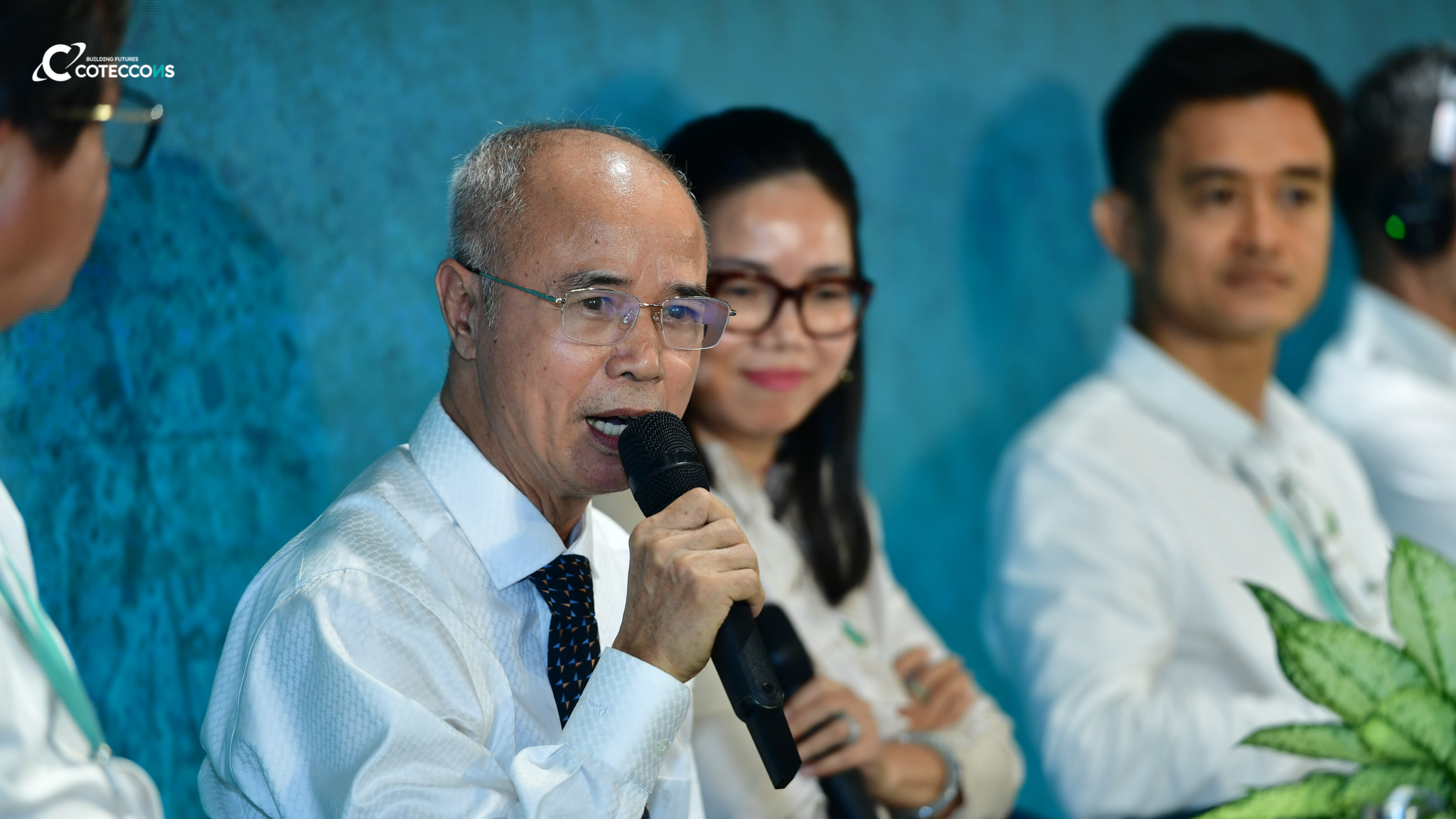 Mr. Pham Quang Vu
The first phase, raising the foreign ownership limit to 50%, had been completed as of the AGM on October 20.
“For the phase toward 100%, we believe that we will also complete it in 2026,” Mr. Vu said.
Responding to the question of whether foreign investors have shown interest, he said many international institutions and foreign shareholders have approached Coteccons to learn more, particularly about its governance capabilities and growth prospects.
However, these engagements do not yet translate into specific investment commitments.
Ms. Nguyen Trinh Thuy Trang added that Coteccons will proactively carry out investor relations activities, rather than simply waiting after opening the limit. In November, Chairman Bolat is expected to meet institutional investors at a conference co-organized by HSC and CLSA in London.
Competitors pay 2–3 times more: How does Coteccons retain its people?
Question: What system does Coteccons use to manage its workforce of approximately 4,000 employees and tens of thousands of workers on its construction sites?
Ms. Nguyen Thi Thanh Huong said the company currently has approximately 4,000 employees and more than 32,000 workers on its construction sites. To operate this organization effectively, Coteccons focuses on three pillars: organizational structure and governance system; talent training and development; and corporate culture.
According to Ms. Huong, Coteccons maintains a lean organizational structure, assigns personnel according to their capabilities and roles, and builds a young management team with expertise, passion and strong commitment. However, for sustainable development, the company cannot rely solely on individual capabilities but must have a governance system strong enough to ensure operations are not disrupted when personnel change.
Therefore, Coteccons has implemented the Workday human capital management platform, enabling managers to access employee information, plan training, develop capabilities and build a succession pipeline.
Alongside technology, the company emphasizes the OWN IT culture – empowerment and a strong sense of ownership over one’s work. According to Ms. Huong, when trusted and empowered, managers at all levels can proactively make decisions, develop their teams and better care for the workforce, including subcontractor personnel.
Adding to the answer, Ms. Nguyen Trinh Thuy Trang emphasized that these three pillars are supported by AI, data and real-time information systems to enhance transparency and fairness, and to limit subjective assessments in people management.
Notably, Coteccons has established the HR Business Partner model, assigning dedicated personnel to work directly alongside business units (BUs) across Vietnam and in international markets. This model enables units to receive timely support in recruitment, talent development and resource management, rather than operating separately from the HR function.
Ms. Nguyen Trinh Thuy Trang: Amid a shortage of workers and engineers in the construction industry, while workload is expected to continue increasing strongly, what solutions does Coteccons have to attract and retain talent and ensure construction capacity?
Ms. Nguyen Thi Thanh Huong acknowledged that the construction labor market is highly competitive. The company has lost some engineers when other companies offered salaries 2–3 times higher. However, she believes this is partly a manifestation of FOMO, following short-lived market trends.
Rather than joining a salary race at all costs, Coteccons has opted for a long-term people strategy, focusing on building an equitable working environment where employees can speak up, share their views and have opportunities for continuous training and development.
According to Ms. Huong, recruitment only addresses immediate needs, while the factors that sustainably retain talent are the working environment, career development opportunities and engagement with the company. Coteccons is committed to not limiting learning opportunities and stands ready to provide the training employees need to enhance their capabilities.
As for construction workers, although they are not directly employed by Coteccons but work through subcontractors, the company still places strong emphasis on building a safe working environment and caring for workers’ well-being.
Programs such as Xây Tết, scholarships, healthcare and on-site safety assurance are maintained to foster long-term engagement. According to Ms. Huong, in an industry with many inherent risks such as construction, income is not the only factor in choosing a workplace; safety and the ability to return home healthy every day are also of particular importance.
Adding to the answer, Mr. Tran Ngoc Hai confirmed that the labor shortage has become evident over the past year or so, driven by labor demand from many industries and localities.
According to him, in addition to welfare and safety policies, construction organization capability is also an important solution to address the labor shortage.
Coteccons requires its site engineering teams to coordinate closely with subcontractors and suppliers, organize work systematically and sequence construction activities efficiently, thereby reducing waiting time and labor waste while improving productivity.
With its current management system and resources, Coteccons remains confident in meeting project owners’ schedule requirements. However, given the prospect of continued growth in workload, the company is also innovating its construction technologies and techniques to gradually reduce reliance on manual labor and enhance workforce efficiency over the long term.
Question: Is the 2026 ESOP a new program or a continuation of the 2025 ESOP? Why has implementation been delayed, and what are the allocation criteria and implementation process? How will the program help retain employees?
Mr. Pham Quang Vu – Member of the BOD of Coteccons explained that this AGM includes two separate proposals on ESOP.
Proposal No. 9 concerns the adjustment and continued implementation of the 2025 ESOP plan using treasury shares. The program was previously delayed because, after the AGM resolution was approved, Decree 245/2025 introduced additional requirements regarding the calculation formula in ESOP plans.
Therefore, Coteccons had to finalize the content and seek shareholders’ re-approval. Proposal No. 10 is for the 2026 ESOP program.
According to Mr. Vu, the ESOP rules have undergone compensation and HR reviews before submission to the BOD and the General Meeting of Shareholders. If approved, the company will proceed to prepare the allocation list and complete procedures with the State Securities Commission.
Ms. Nguyen Thi Thanh Huong – Human Capital Director added that ESOP is only one of many compensation policies, alongside the 13th-month salary, job performance bonuses, achievement-based bonuses and bonuses for exceeding targets.
ESOP is aimed at employees with outstanding contributions, aligning their interests with the company’s long-term development over many years.
She also noted that Coteccons has built the Young Talent program with universities, engaging students from their third year, providing training and developing career paths to build the future pipeline of engineers, managers and construction managers.
Concluding the dialogue session, Ms. Nguyen Trinh Thuy Trang emphasized that Coteccons welcomes former employees who wish to return when they are aligned with the company’s culture, while maintaining discipline toward conduct that exceeds the prescribed limits.
“We are very tolerant, but also very demanding,” Ms. Trang shared.